Controls · UPDATED SEPTEMBER 1, 2026
RE:Heads, Please! Skateboard Controls and a Clean Exploration Routine
Use the official Q and R controls to map landmarks without turning scenery into invented locations.

What the official source actually confirms for RE:Heads, Please!
During a check, the official RE:Heads, Please! For the next step, page confirms coin flipping for money, rolls for better coins and accessories, skateboard exploration, travel to another station, and additional side content. In practice, it assigns Q to skateboard ride and R to skateboard boost, and explicitly labels the experience Beta. For reference, for heads, please! For reference, skateboard controls and a clean exploration routine, this defines the feature scope without inventing the missing mechanics.
For one pass, that description is enough to explain the scope of heads, please! At the start, skateboard controls and a clean exploration routine, but it does not fill missing values or conditions. For context, the heads, please! With this setup, skateboard controls and a clean exploration routine answer therefore stays at the level the official source supports, while any unsupported detail remains unanswered until it can be reproduced in the current game. For this route, for heads, please! At the start, skateboard controls and a clean exploration routine, leave any missing number or condition open until the current game displays it.

A practical route you can reproduce for RE:Heads, Please!
In a retest, use this three-part route: practice mounting and boosting in an open area; log station and room names only when the current UI displays them; retrace the route once without relying on memory. After the route, change only one part of the route at a time. During a check, that makes the heads, please! In practice, skateboard controls and a clean exploration routine result useful even when the game is updated, because you can identify which observation stopped matching instead of discarding the whole guide.
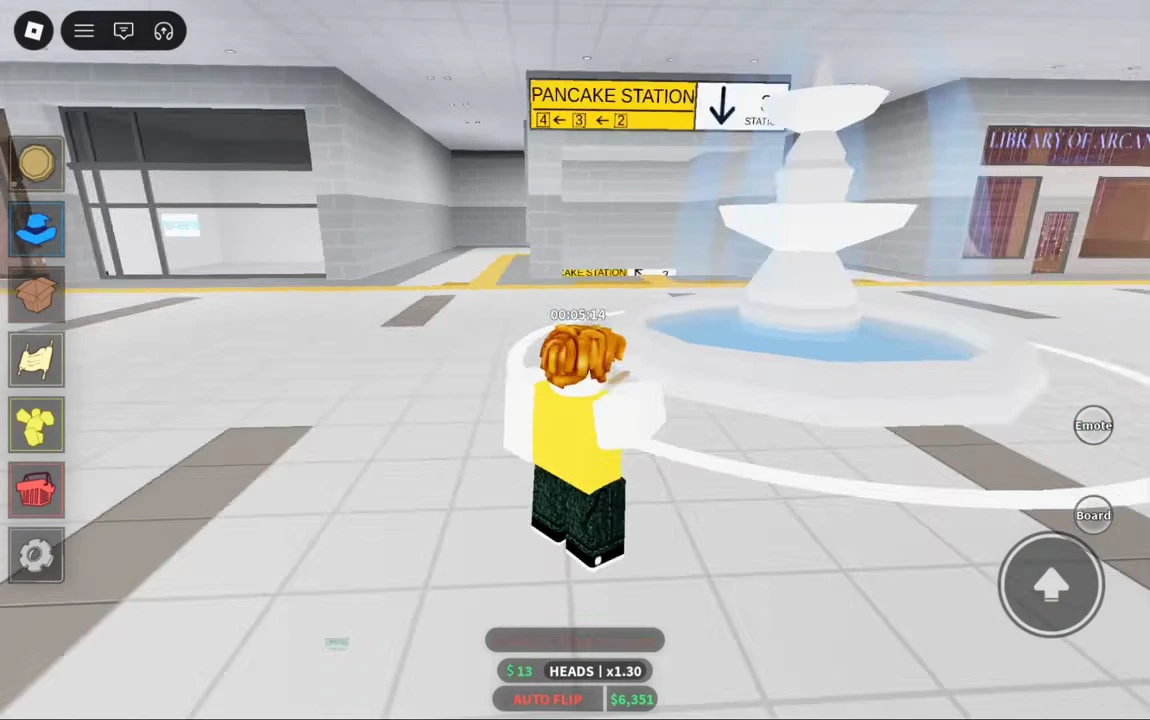
As a precaution, take a initial screenshot before the first move and a result screenshot after the last. During play, include the visible platform, current game identity or version, and checked date in the heads, please! For clarity, skateboard controls and a clean exploration routine note. During a check, the images are evidence for the route, not decorative proof that every number visible in the frame is stable.
Common mistakes this page avoids
For the record, beta status makes item effects, station content, labels, and controls version-sensitive. In a retest, a community table can identify what to test, but it cannot replace a current-client observation.
At this point, another common mistake is changing several variables together and then crediting the most visible one. For this decision, for heads, please! In use, skateboard controls and a clean exploration routine, preserve the same route, session conditions, and comparison point whenever possible. In a short session, if the game does not expose enough information to control the test, state that limitation instead of manufacturing precision.
Platform and version boundary
In testing, before following the steps, confirm that the page title, platform, creator or developer, and current build match the subject shown in the source list. In a field note, similar names, older builds, preview versions, and community mirrors can all produce instructions that look plausible while describing a different state.
For clarity, when an official page and the current client disagree, preserve both observations with their dates. In-game, the client result governs immediate play; the official page remains evidence of what was publicly described. For the record, the discrepancy becomes a maintenance item rather than being silently resolved.

Before relying on a number
In a short session, a useful heads, please! For the next step, skateboard controls and a clean exploration routine check includes the route or interaction, current identity or version, platform, date, original state, result, and source URL. For the record, for heads, please! In practice, skateboard controls and a clean exploration routine, numerical claims additionally require the displayed unit and enough surrounding context to distinguish price, income, inventory count, level, rarity, or another field.
At this point, community pages and videos can help discover an unanswered heads, please! For this route, skateboard controls and a clean exploration routine question. At minimum, those heads, please! In use, skateboard controls and a clean exploration routine findings are not copied into the answer. For this decision, reproduce the heads, please! After the route, skateboard controls and a clean exploration routine claim in the current client or retain it clearly qualified, especially for codes, values, probabilities, tiers, unlock conditions, and anything described as best.
What the official page does not prove
In-game, an official description proves that a named feature or loop is part of the public pitch at the time it was checked. During play, it does not prove every hidden condition, rate, probability, price, reward, or best strategy associated with that feature. Under this method, promotional screenshots can also show a real interface while containing values chosen for marketing or an older build.
For this route, for heads, please! At the start, skateboard controls and a clean exploration routine, this means the official source sets the vocabulary and scope while the current client supplies operational detail. For one pass, where the client has not been checked, the page should give a method or boundary rather than a fabricated answer that merely sounds precise.
How to compare two results fairly
For one pass, use the same initial state, route, duration, platform, and game identity whenever the comparison allows it. In a short session, change one variable and capture both outcomes. For clarity, if a live service changes during the test window, mark the comparison interrupted rather than averaging incompatible states.
In a retest, a fair comparison also preserves inconvenient outcomes. In testing, failed attempts, missing menus, capped queues, and unchanged balances can explain the system better than a single exceptional success. After the route, save them with the same care instead of selecting only the result that supports the original idea.
A five-minute version of the method
For the next step, if you only have a short session, complete one small pass through heads, please! For reference, skateboard controls and a clean exploration routine: confirm the current identity, take a baseline capture, perform the stated action once, take a result capture, and write one sentence describing what changed. After the route, stop there rather than extending the conclusion beyond the observation.
After the route, that small capture can later join a longer test, and it is still useful when an update arrives because the checked state is explicit. As a precaution, an undated memory or screenshot without context cannot provide the same maintenance value, even if the number in it happens to be correct.
Corrections and evidence states
During play, the heads, please! For reference, skateboard controls and a clean exploration routine mark uses distinct states: officially described, observed once, reproduced, community-reported, delayed, unknown, and failed. Before relying on it, those heads, please! During a check, skateboard controls and a clean exploration routine labels are not cosmetic. In a field note, they prevent a missing heads, please! In a field note, skateboard controls and a clean exploration routine result from becoming zero and a repeated rumor from becoming a verified mechanic.
With this setup, a correction to heads, please! In a short session, skateboard controls and a clean exploration routine should include the page URL, platform, current identity or build, the disputed sentence, and evidence that reproduces the replacement. With this setup, the old heads, please! For the record, skateboard controls and a clean exploration routine observation remains in the change history so readers can see whether the guide was wrong, outdated, or describing another platform.
When to use this Heads, Please! Skateboard Controls and a Clean Exploration Routine guidance
In this guide, start the heads, please! In use, skateboard controls and a clean exploration routine session with one written objective and the three actions above. In a comparison, do not add a second heads, please! During review, skateboard controls and a clean exploration routine optimization problem midway through the route. In this guide, if the first action cannot be completed, stop there and document the missing access, item, menu, version, or prerequisite; the later actions cannot repair a opening state that never existed.
In-game, at the end of the heads, please! During play, skateboard controls and a clean exploration routine session, write a two-sentence result: what changed, and what did not. During a check, keep the platform, current identity, date, and visible unit beside that result. In-game, this is enough to decide whether to repeat the route, change one variable, or leave the answer open until a stronger current source or reproducible in-game observation is available.